
Our Approach
Our Approach
Good organization is not one dramatic makeover. It is a repeatable method that fits the space, the objects, and the rhythm of the household.


Keep in mind
These practical checks help the process stay clear from selection through daily use.
The details, in a useful order
Clear steps and context help you make the next decision without adding unnecessary complexity.
Measure the usable space
Record interior dimensions and note hinges, plumbing, handles, shelf lips, and door clearance.
Group by real use
Keep items together by task, frequency, or room—not only by appearance.
Give each group a boundary
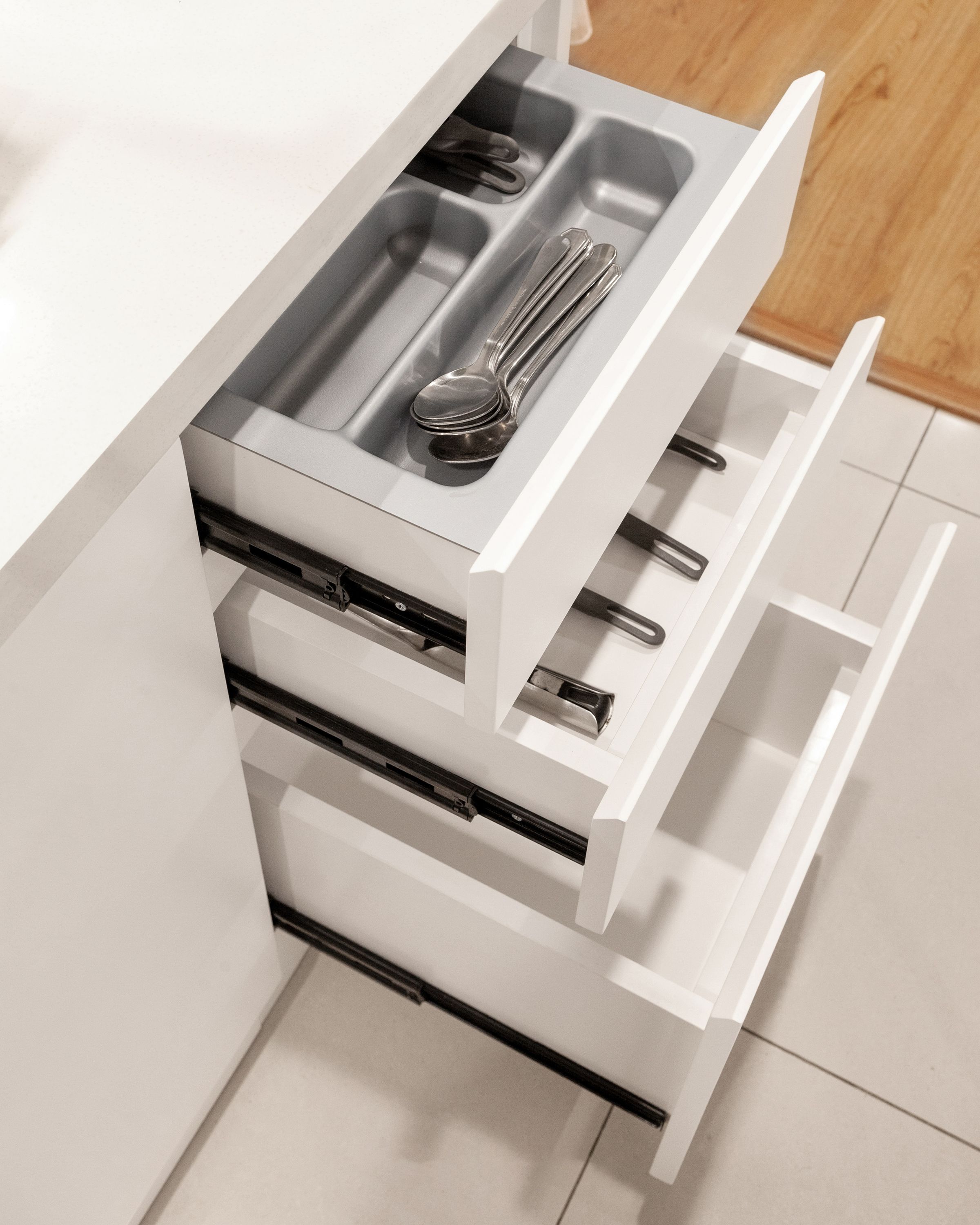
Use dividers, bins, trays, or shelves to make capacity visible and prevent categories from blending.
Leave room to reset
A system works better when items can be returned without rearranging everything around them.
Use the four-step method in any room
The same sequence can be adapted to a pantry, wardrobe, bathroom shelf, entryway, or work surface.
Measure twice
Record the narrowest usable dimensions and note how doors, drawers, and nearby objects move through the area.
Edit before filling
Remove items that do not belong in the zone before choosing how many containers or dividers are needed.
Test the reset
Use the arrangement for several ordinary days. If returning an item requires too many steps, simplify the boundary.